
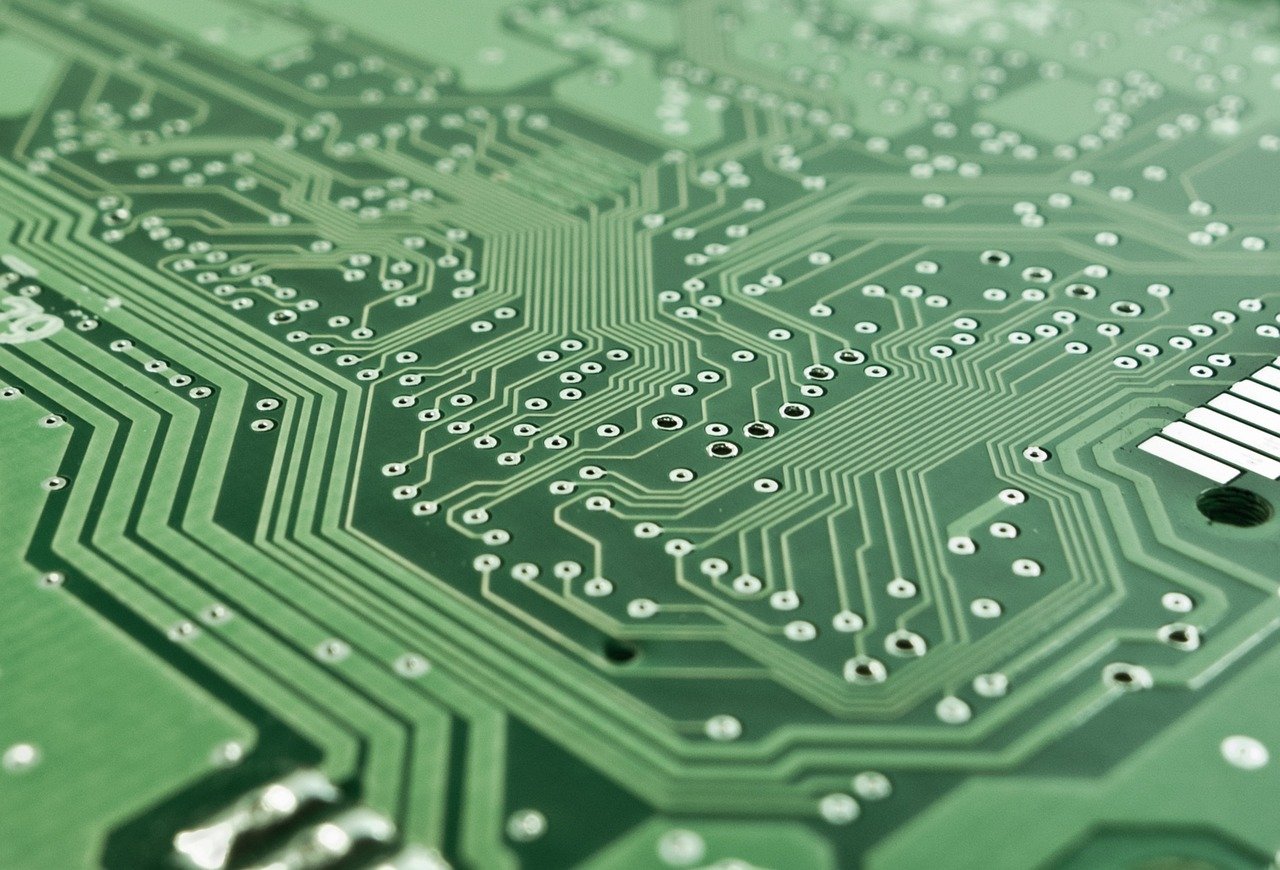
In a world increasingly driven by digital innovation, a single class of materials quietly forms the backbone of nearly every electronic device we use: semiconductors. From the smartphone in your pocket to the complex systems guiding autonomous vehicles, these miraculous materials are the unsung heroes, enabling the astonishing speed, power, and connectivity that define modern life. Understanding semiconductors isn’t just about appreciating the technology; it’s about grasping the fundamental force shaping our present and accelerating us into the future.
What Are Semiconductors? The Core Building Blocks of Modern Tech
At their heart, semiconductors are a unique class of materials with electrical conductivity properties that lie between those of a conductor (like copper, which easily allows electricity to flow) and an insulator (like rubber, which blocks it). This precise control over electron flow is what makes them indispensable for electronics.
The Science Behind the Magic
The magic of semiconductors stems from their atomic structure. Materials like silicon, germanium, and gallium arsenide are the most common. In their pure state, they are moderate insulators. However, their true power emerges when they undergo a process called doping.
- Intrinsic Semiconductors: Pure materials with a balanced number of electrons and holes (missing electrons).
- Extrinsic Semiconductors (Doped):
- N-type: Doped with impurities (e.g., phosphorus) that add extra free electrons, increasing conductivity.
- P-type: Doped with impurities (e.g., boron) that create “holes” (places where electrons are missing), allowing other electrons to move into these spaces, also increasing conductivity.
This ability to precisely control conductivity by adding minuscule amounts of impurities is what allows engineers to create tiny on/off switches, logic gates, and memory cells that form the foundation of all digital processing.
Actionable Takeaway: Recognize that the precise control over electrical current, achieved through doping, is the fundamental principle that differentiates semiconductors and enables complex electronic circuits.
The Mighty Microchip: From Sand to Silicon Brains
The journey from a simple semiconductor material like silicon to a complex microchip capable of billions of calculations per second is one of humanity’s most remarkable engineering feats. These tiny silicon brains are at the core of all modern computation.
The Manufacturing Marvel: Chip Fabrication
Microchip manufacturing is an incredibly intricate, multi-stage process conducted in ultra-clean “fabs” (fabrication plants). It involves hundreds of steps, including:
- Photolithography: Using light to print intricate circuit patterns onto silicon wafers, similar to developing a photograph.
- Etching: Removing unwanted material to define the circuit pathways.
- Deposition: Adding layers of different materials (conductors, insulators, other semiconductors).
- Doping: Precisely implanting impurities to create P-type and N-type regions.
This cyclical process builds up layers, creating billions of transistors and other components on a single wafer. The ultimate goal is to create integrated circuits (ICs), where multiple electronic components are integrated into a single, compact device.
The Enduring Legacy of Moore’s Law
For decades, the semiconductor industry has been driven by Moore’s Law, an observation by Intel co-founder Gordon Moore. It states that the number of transistors on an integrated circuit doubles approximately every two years. While its pace is slowing, this principle has led to an exponential increase in computing power and a dramatic decrease in cost, revolutionizing technology repeatedly.
Practical Examples:
- CPUs (Central Processing Units): The “brain” of computers, executing instructions and performing calculations.
- GPUs (Graphics Processing Units): Specialized chips optimized for parallel processing, crucial for gaming, AI, and scientific simulations.
- Memory Chips (RAM, Flash): Storing data temporarily or permanently.
Actionable Takeaway: Appreciate the immense complexity and precision required for microchip manufacturing, which translates raw materials into the intelligence powering our devices. Moore’s Law, though challenged, continues to inspire innovation in chip design and fabrication.
Applications of Semiconductors: Powering Our Digital World
It’s almost impossible to imagine a modern industry or aspect of daily life untouched by semiconductors. Their versatility makes them indispensable across a vast array of applications, continuously expanding their reach.
Ubiquitous Presence Across Industries
Semiconductors are not just for computers; they are the enabling technology for virtually everything electronic:
- Consumer Electronics: Smartphones, tablets, laptops, smart TVs, wearables – all rely heavily on advanced processors, memory chips, and sensors.
- Automotive Industry: Modern vehicles, especially electric vehicles (EVs) and autonomous cars, are essentially computers on wheels. Semiconductors manage engine control, infotainment, safety systems, power management, and LiDAR/radar for self-driving capabilities.
- Internet of Things (IoT): Billions of connected devices, from smart home gadgets to industrial sensors, are powered by low-power, specialized semiconductor chips that enable communication and data processing at the edge.
- Healthcare: Medical imaging equipment (MRI, CT scanners), diagnostic tools, pacemakers, and wearable health monitors all utilize sophisticated semiconductor components.
- Artificial Intelligence (AI) and Machine Learning (ML): The incredible growth in AI is largely fueled by specialized AI chips, such as GPUs and ASICs (Application-Specific Integrated Circuits), designed for high-performance parallel processing.
- Renewable Energy: Power semiconductors (like those made from Silicon Carbide, SiC) are crucial for efficient power conversion in solar inverters, wind turbine control, and battery management systems.
Statistics: The global semiconductor market size reached approximately $574 billion in 2022 and is projected to grow significantly, highlighting its immense economic importance and pervasive integration.
Actionable Takeaway: Reflect on how semiconductors are not merely components, but the fundamental enablers of innovation and efficiency across diverse sectors, making them critical for economic growth and technological advancement.
Key Trends and Innovations Shaping the Semiconductor Landscape
The semiconductor industry is relentless in its pursuit of advancement. Even as traditional scaling faces physical limits, new approaches and materials are emerging to push the boundaries of what’s possible.
Beyond Traditional Scaling
With transistors approaching atomic scales, innovations are shifting focus:
- Advanced Packaging: Instead of making individual transistors smaller, this involves stacking multiple chips or “chiplets” in a 3D configuration. This allows for greater functionality and performance in a smaller footprint by enabling heterogeneous integration of different components (e.g., CPU, GPU, memory) from various manufacturers.
- New Materials:
- Gallium Nitride (GaN) and Silicon Carbide (SiC): These “wide bandgap” semiconductors are gaining traction for power electronics due to their ability to operate at higher voltages, temperatures, and frequencies with greater efficiency. They are transforming electric vehicle charging, power supplies, and 5G infrastructure.
- 2D Materials (e.g., Graphene): While still largely in research, materials like graphene hold promise for ultra-thin, high-speed, and flexible electronics in the future.
- Specialized Architectures: The rise of AI and specific computing needs has led to the development of highly optimized chips (e.g., neural processing units, NPUs) that are incredibly efficient at tasks like machine learning inference.
The Road Ahead: Future Possibilities
Innovations are not just incremental; they are opening doors to entirely new paradigms:
- Quantum Computing: While in its nascent stages, quantum computing relies on principles completely different from traditional semiconductors. However, the control and fabrication of quantum bits (qubits) still involve sophisticated semiconductor technology.
- Neuromorphic Computing: Inspired by the human brain, these architectures aim to process information more like biological neural networks, offering potential breakthroughs in AI efficiency and learning.
- Photonics: Integrating optical components with electronic circuits on the same chip could lead to ultra-fast data transmission and processing.
Practical Example: Apple’s M-series chips, which integrate CPU, GPU, and Neural Engine onto a single system-on-a-chip (SoC) using advanced packaging, demonstrate the power of heterogeneous integration for enhanced performance and efficiency.
Actionable Takeaway: Understand that the semiconductor industry is evolving beyond merely shrinking transistors, embracing novel materials, advanced packaging, and specialized architectures to continue driving technological progress.
The Economic and Geopolitical Impact of Semiconductors
Beyond their technological marvel, semiconductors hold immense economic and geopolitical significance. They are a critical strategic asset, central to national security and global power dynamics.
A Globalized, Yet Vulnerable, Supply Chain
The semiconductor industry is characterized by an incredibly complex and globally distributed supply chain, involving design (e.g., NVIDIA, Qualcomm), equipment manufacturing (e.g., ASML), fabrication (e.g., TSMC, Intel), and packaging/testing (e.g., ASE). This specialization, while efficient, creates vulnerabilities.
- The Chip Shortage: The COVID-19 pandemic highlighted this vulnerability, leading to widespread chip shortages that impacted industries from automotive to consumer electronics, causing significant economic disruption and revenue losses.
- Concentration of Manufacturing: A significant portion of leading-edge chip manufacturing is concentrated in Taiwan (TSMC), creating geopolitical concerns and prompting nations to invest heavily in domestic manufacturing capabilities.
Geopolitical Battleground and Strategic Asset
The “chip war” is a defining feature of 21st-century geopolitics:
- National Security: Advanced semiconductors are essential for defense systems, intelligence gathering, and critical infrastructure. Control over this technology is seen as paramount for national security.
- Economic Power: Dominance in semiconductor technology translates directly to economic leverage and leadership in future industries like AI, quantum computing, and advanced manufacturing.
- Government Investments: Countries like the United States (CHIPS Act), Europe (European Chips Act), and China are investing billions in subsidies, R&D, and manufacturing incentives to bolster domestic semiconductor industries and reduce reliance on foreign supply chains.
Statistics: Taiwan Semiconductor Manufacturing Company (TSMC) alone accounts for over 50% of the global foundry market share, and an even higher percentage of advanced chip production, underscoring the concentration risk.
Actionable Takeaway: Recognize that semiconductors are not just commercial products but strategic national assets. Their supply chain resilience and technological leadership are crucial determinants of global economic stability and geopolitical influence.
Conclusion
Semiconductors are far more than just components; they are the invisible architects of our digital age, silently powering the innovations that reshape our lives, industries, and societies. From the fundamental physics of doping to the complex artistry of microchip fabrication, and their pervasive applications across every sector, their impact is profound and ever-expanding. As we navigate a future filled with AI, IoT, electric vehicles, and beyond, the relentless progress in semiconductor technology will remain the single most critical driver, continuing to unlock unprecedented possibilities and redefine the boundaries of human achievement. Understanding this miniature world is key to understanding our macroscopic future.